Ireland's own
drone factory.
A sovereign, indigenous manufacturing capability — built on Irish soil to protect our seas, serve our people, and capture the value at home. Made in Ireland, made for Europe.
What Ireland gets back.
In plain terms: a €75M national programme builds a self-funding factory that returns tax, jobs, exports and import-substitution to the State — and Ireland keeps the patents.
Modelled 5-year figures, to be validated. Revenue · gross margin · EBITDA · payback · Exchequer return · GVA — standard measures, plainly shown.
The bottom line — the State funds it once and earns it back in tax, jobs and exports — while owning the IP.
Real contracts. Real demand.
The Irish State is re-arming and re-tooling — and publishing the spend. A real sample, largest first:
Live on eTenders → · EU TED → · value-ranked via data.gov.ie open data. (Both portals block embedding, so we link out rather than show a blank frame.)
The buyers are already funded.
Honest status: these are funded demand segments and pipeline — the budgets exist and the need is named, but these are not yet signed contracts. Modelled.
In plain terms — the money to buy is already budgeted; we supply what the State and the market are funded to need.
Capital follows proof, not promises.
Each phase unlocks the next only once it has paid out: a costed pilot line, then multi-line scale, then the R&D and electronics frontier. Every euro below is traced to a machine, a building, a job or an order.
Phased programme · all figures modelled, to be validated against final quotes. Full model → /pitch/financials/
No black boxes. A line for each euro.
Modelled €75M allocation. Equipment supplied by a tier-1 turnkey OEM partner (under NDA). To be validated against final quotes.
One line, ~€800k of machines.
Equipment ≈ €800k. With fit-out of a leased Údarás unit (€250k), first inventory & working capital (€650k) and a certification/contingency share (€500k), an all-in line is ~€2.2M.
Market ranges (winders $6.5k–$80k ea; SMT line $200k–$800k). Supplier under NDA. Modelled, to be validated.
One machine. The whole plan.
A €37k machine winds 100–300 motors an hour. The entire Year-5 plan — ~€60M revenue, ~4,000 drones, ~28,000 motors — is roughly one machine's annual output. It pays for itself in under a thousand motors — a few days.
So the machine is never the constraint — demand, certification and execution are. That is why most of the €75M is market access, IP and working capital, not machines.
Throughput: industry data (100–300 small stators/hr). Margin & volumes modelled, to be validated.
One person, ~30 machines.
A near-lights-out line: 1.5 FTE runs ~30 automated machines at ~250,000 motors/yr, so labour is ≈ €0.33 a motor — the margin moat. We train, not staff: a few deeply-skilled Gaeltacht operators, the hardest thing to copy.
EU-Motors Poland precedent (100k motors/mo). *In-house motor cost, small/mid class — not a finished-drone price. Modelled.
Don't sell motors. Sell drones.
Bare small motors are a commodity — rivals sell them for ~€3, so that is not our game. The value climbs from a €120 certified motor (~€60 margin) to a €15–20k finished precision drone — 6–8 of our motors plus integration. Owning the motor is the margin floor; selling the drone is the 20×+ multiplier. Tap a bar for the detail.
FPV motor ~$2.9 (bulk) · certified/heavy motor ASP ~€120 · ag/inspection drone €15–20k (DJI Agras-class). Modelled.
Margin compounds with scale.
Drivers: own-the-motor margin × 1-operator:30-machines × multi-line scale × export pull. Conservative on price, aggressive on efficiency.
Every number modelled, to be validated against final quotes — not a forecast or a guarantee.
The State funds it once — and earns it back.
Grants are returned through tax and jobs within a few years — and whatever margin remains is reinvested into Irish jobs, so the country compounds the benefit.
Irish CT 12.5% · employer PRSI ~11.05% · CSO/Revenue bases. 5-yr cumulative, modelled.
Is it smart?
Why it's smart
- Capital-light: a €37k machine underwrites millions in drone revenue; the whole plan needs ~one machine of winding.
- Value capture: own the motor as the margin floor, sell the €15–20k drone for the multiplier.
- Sovereignty premium: EU/NDAA-clean, on-shore certified — buyable where Chinese product isn't.
The honest risk
- Not bare small motors: rivals sell at ~€3 — we must sell certified motors & finished drones.
- The real bottleneck is demand, certification and working capital — not making.
- So we fund market access, IP and inventory first — exactly where the €75M goes.
An honest plan beats a loud one. The economics work because we climb the value chain — and we've costed the risk in, not out.
Every penny, accounted for.
Our AI expense-audit engine (pingwage / OverCaml) monitors every euro of programme spend — especially State and grant money — categorising it, reconciling it to orders, and flagging anomalies, aligned with EU public-funds transparency. No penny goes unnoticed.
Governance commitment — engine in deployment. Aligned with EU transparency norms for publicly-supported programmes.
A moat others must license.
Five Irish patent applications protect the inventive steps behind the line — filed first, in Ireland. We name the areas, not the claims: the detail stays confidential until granted, so novelty is preserved.
5 short-term Irish patents (IPOI) · areas only · full specifications held in the confidential data room.
Ireland is grown on grass.
Ireland exports €17bn of food & drink — led by €6.3bn of grass-fed dairy. Yet 56% of the land is grass and just ~12% is cropped. The drone job here is grassland & clover reseeding, tillage spot-work, forestry planting and high-value new crops — protecting the country’s biggest food export.
Bord Bia 2024 · CSO land use (grassland ~56%, tillage ~300,000 ha).
For Ireland — a daily drone over every field defends the €6.3bn dairy export that bad grass-weather keeps threatening.
It rides shotgun.
The drone doesn’t replace the tractor — it complements it. While the tractor does the heavy ground work, the drone flies the field every day, sends the farmer a live crop-health map, catches stress two weeks before it shows, and spot-treats or seeds what the tractor can’t reach — at a third of the cost and no soil compaction.
We lend a hand: finance it like a tractor, or sell it as a service — hardware plus a daily-visuals subscription. For the farmer, lower inputs and higher yield; for drones.irish, a sale and recurring monthly revenue per farm.
Drone $5–9/ac vs tractor ~$15/ac; capex ~$30–40k vs ~$500k; multispectral NDVI 2-week early warning. Industry data, modelled.
Commercially — every Irish farm becomes a hardware sale plus a recurring daily-monitoring subscription.
A €75M programme, built in phases.
Phase 1 proves the line for ~€2.2M. The full €75M scales it to a national capability — multiple lines, magnet-free & amphibious R&D, and an export-ready fleet. Indigenous Irish grants form the non-dilutive base (Enterprise Ireland + Údarás na Gaeltachta — we qualify as a High Potential Start-Up); equity, EU and strategic capital scale it.
Phase 1 ~€2.2M (modelled) → €75M programme. Enterprise Ireland · Údarás na Gaeltachta · NWRA · WDC · EU/EDF, 2026. Full model →
Indigenous grants first (non-dilutive); equity, EU and strategic capital scale to €75M. Figures modelled — to be set with advisers.
Ticks every box.
Before any agency backs a project it runs the same checklist — eligibility, regulation, procurement, climate, governance, region. We mapped all six to a named Irish or EU rule and built to it. Status below is aligned / route-mapped — honest, not "already certified".
Each box maps to a named Irish/EU rule — full citations in the data-room annex.
In plain terms — we don't ask the State to make an exception; we already fit the rules it applies to everyone.
No single grant covers €75M.
And we know it. At this scale a project is a "Large Investment Project" under EU state-aid rules — grants are capped and the rest is blended. So we structure it as a stack: a non-dilutive grant base, strategic & sovereign equity, matched private capital and asset finance. Capital follows proof.
Tranche sizes illustrative/modelled. Údarás (lead) · Enterprise Ireland · DTIF (R&D consortium) · ISIF · SBCI/EIB. Regional-aid ceiling per Commission Decision SA.101399; large projects require EU notification.
For the State — a credible blended structure that respects the state-aid rules, not a single cheque that breaks them.
Built to the rulebook.
Two regulated roles, one clean path. As a manufacturer we build to an EASA class with CE marking; as an operator we fly in the Specific category on a documented risk assessment — mapped to the rules, not hoping to be waved through.
Honest note: Ireland has no live U-space zone yet, so BVLOS today is case-by-case SORA — the framework is standing up now. Status: route mapped, not yet certified.
In plain terms — every flight and every airframe has a named European rule behind it, and we're built to clear it.
We help Ireland hit its own numbers.
The hardest, most behind targets in Irish law sit in agriculture and land use — and the State openly says it's off-track, with a measurement gap. Precision-ag and afforestation MRV drones are a delivery mechanism for the very numbers the State has already committed to.
Climate Action Plan 2025 · EPA off-track projections (2025) · OGP GPP Circular 17/2025 · PESCO. Targets are the State's own; our contribution is a delivery tool, modelled.
For the country — we don't ask the State to bend its rules; we help it hit the targets it has already set — and stay inside our neutrality.
Japan already ran this play.
Japan faced ageing farmers, rural depopulation, tiny fragmented farms and remote islands — and answered with drones, building a $1.9bn drone economy. Ireland has the same drivers. The difference: Ireland can manufacture what Japan mostly imports.
For Ireland — Japan de-risked the thesis over 25 years; we copy the demand and own the supply.
Same curve. Better seat.
The bottom line — Japan spent 25 years proving this market; €75M lets Ireland enter it already owning the supply chain.
The market is right next door.
Germany leads, France second; the EU commercial-drone market hits $31.6B by 2033. Adoption abroad is 30–42%; Ireland ~0%. Tap a bar.
For the Exchequer — a €31.6B market on our doorstep is ~0% served by Irish-made drones — the clearest open goal in Europe.
Clean-room, not copy.
We match the proven class — the payload, the endurance, the spray rate — but engineer it independently, on our own six patents (magnet-free motor, adaptive winding, transmedium, cartridge). That means no licence fees, full margin, and a legally sovereign product Ireland can export anywhere.
Commercially — owning the IP instead of licensing it keeps every euro of margin in Ireland.
Each turn funds the next.
Manufacture cheaply at scale, lease instead of sell, operate from Ireland, service forever. Every drone earns for years and every lease funds the next line. That is the compounding machine the €75M starts.
The bottom line — one drone, built once, earns build-margin, lease income, operating fees and maintenance — for a decade.
Moonshots, paid by today.
In plain terms — we bankroll the moonshots with today's contracts — all the upside, none of the bet-the-farm risk.
Built by Irish hands.
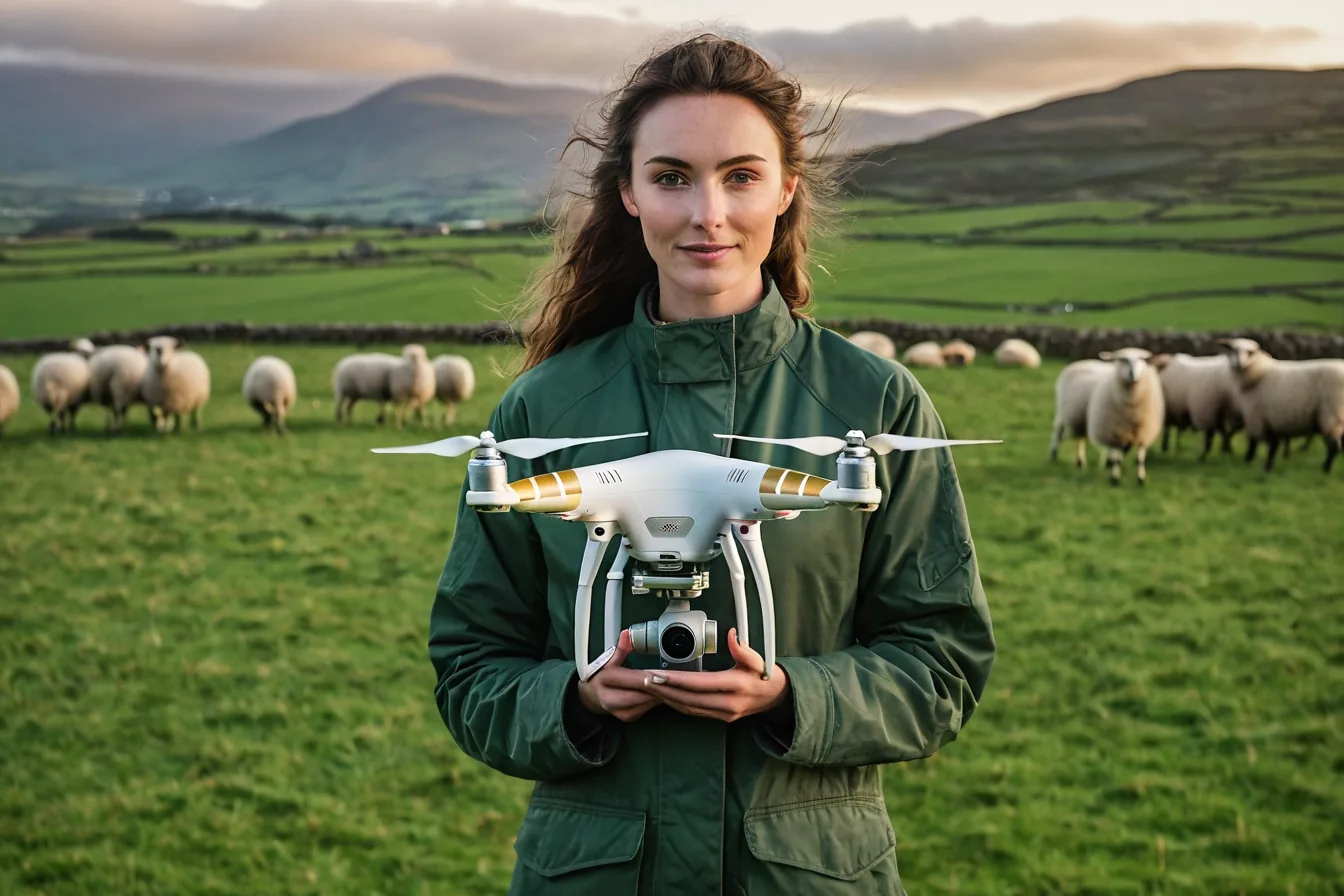
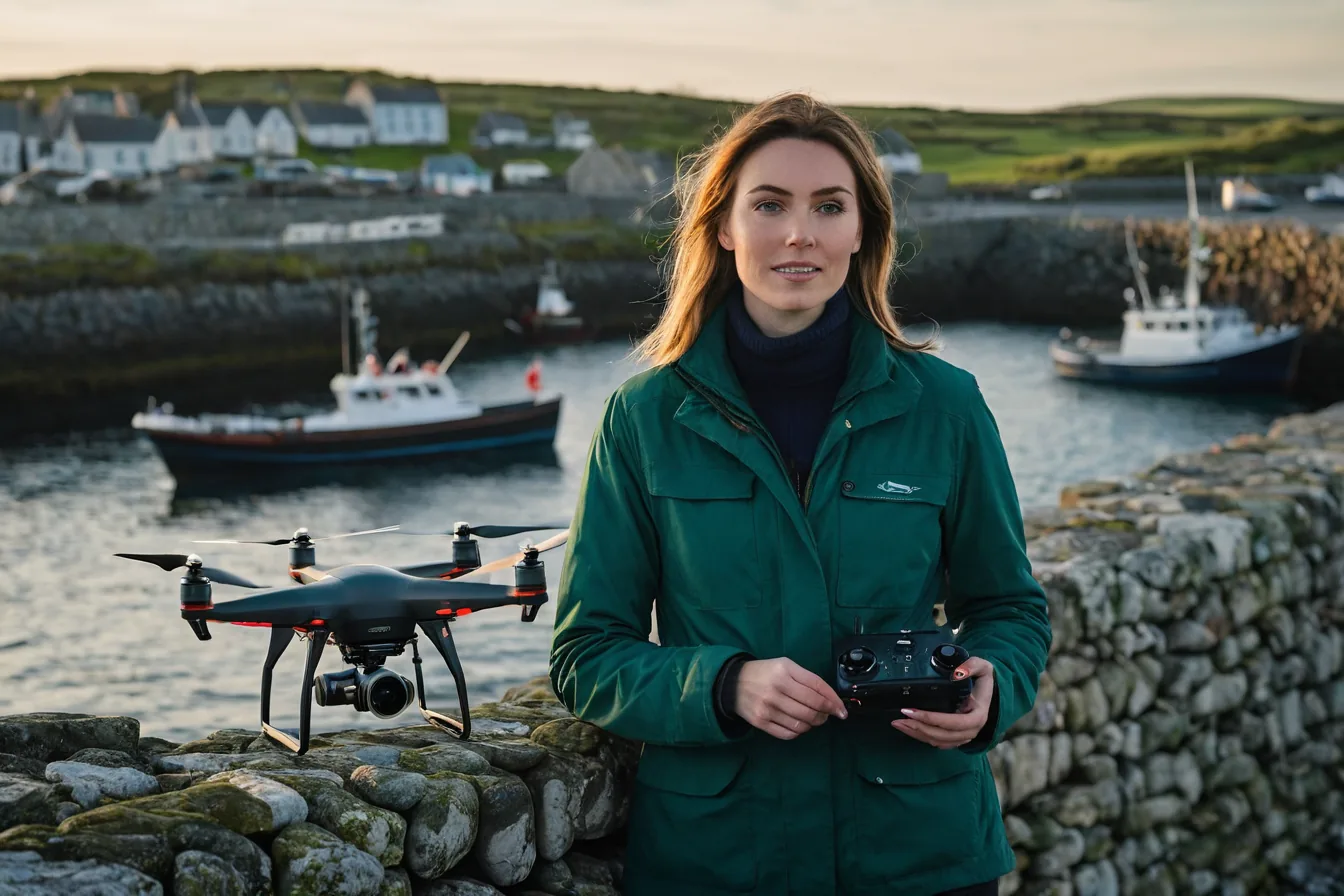
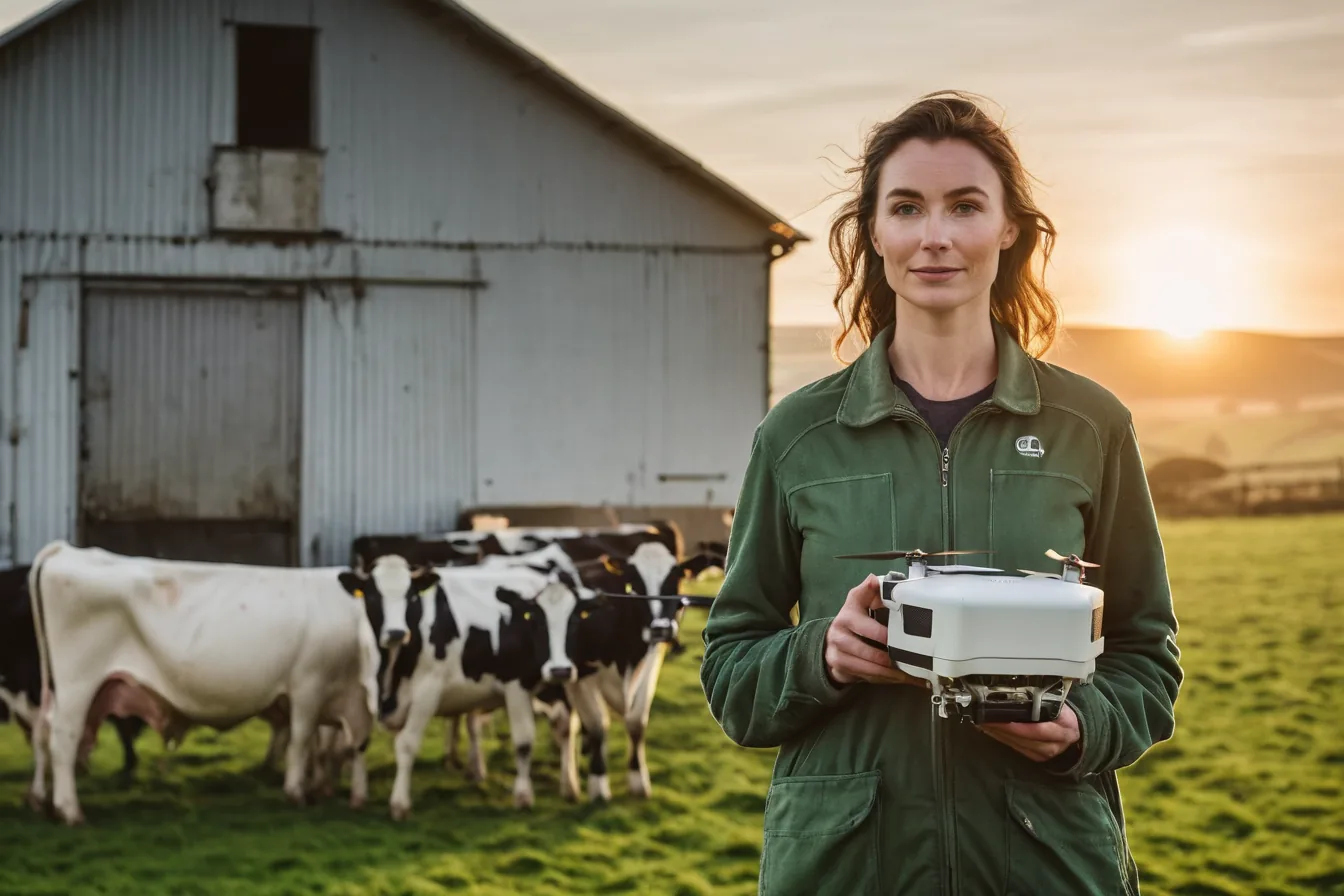
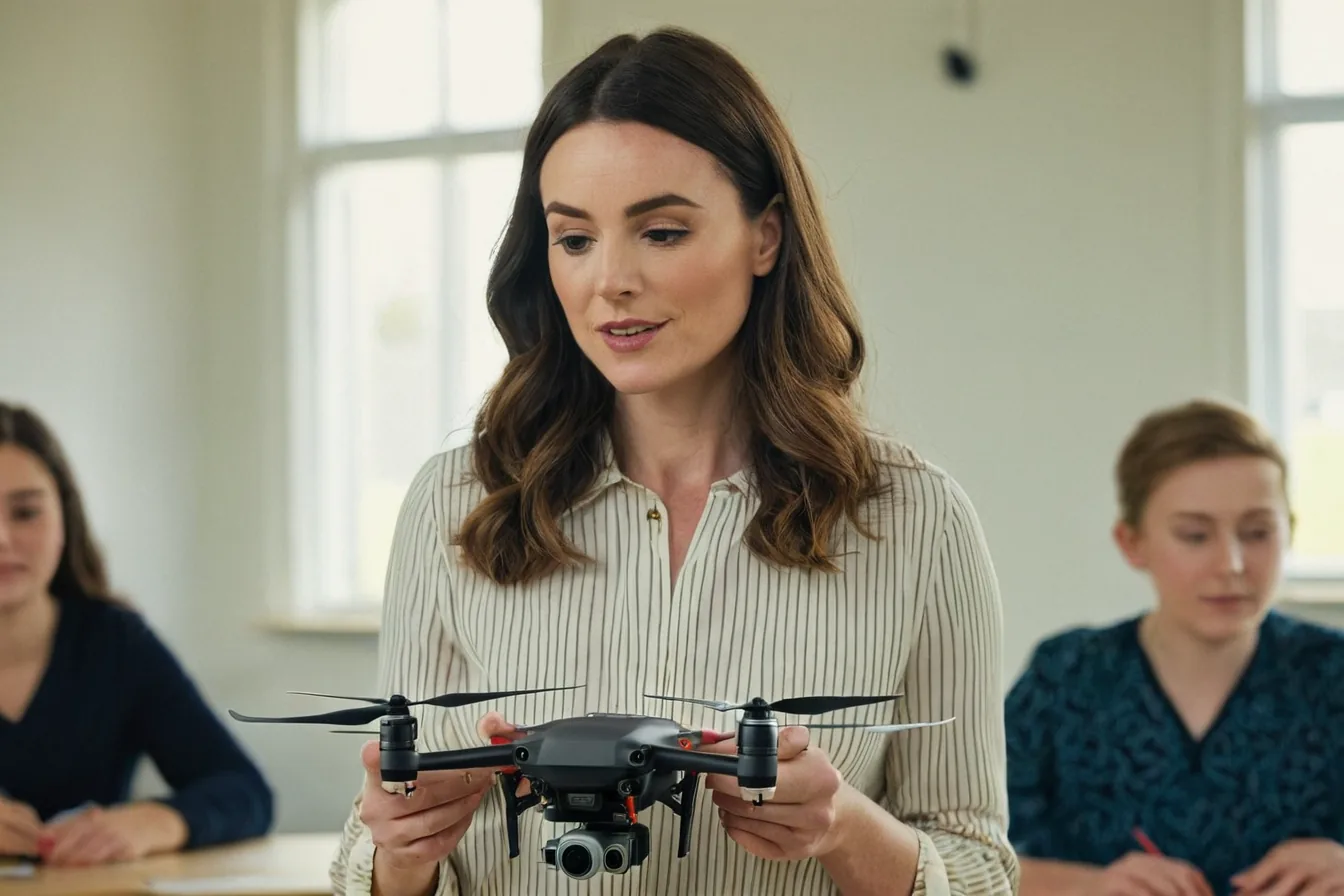
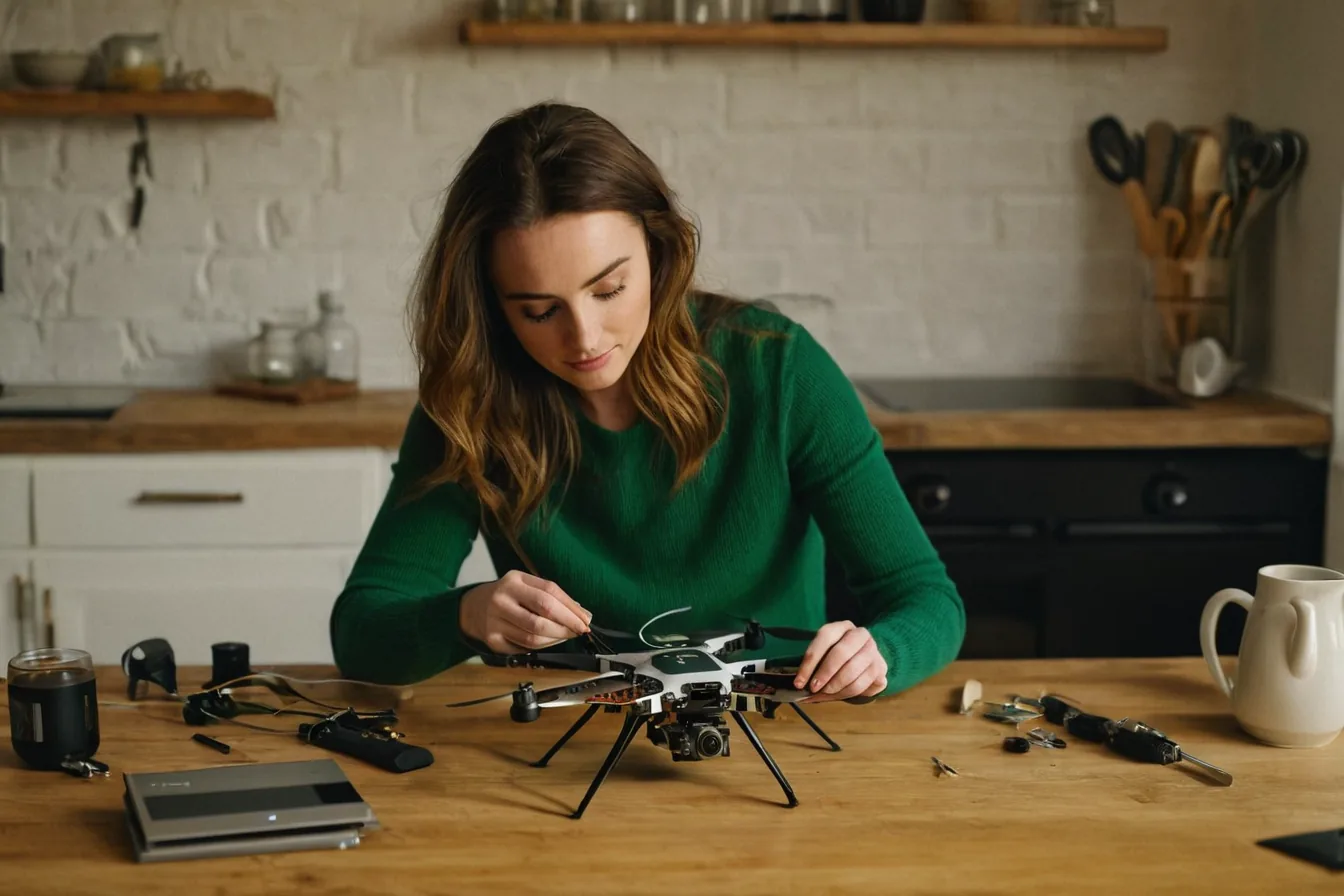
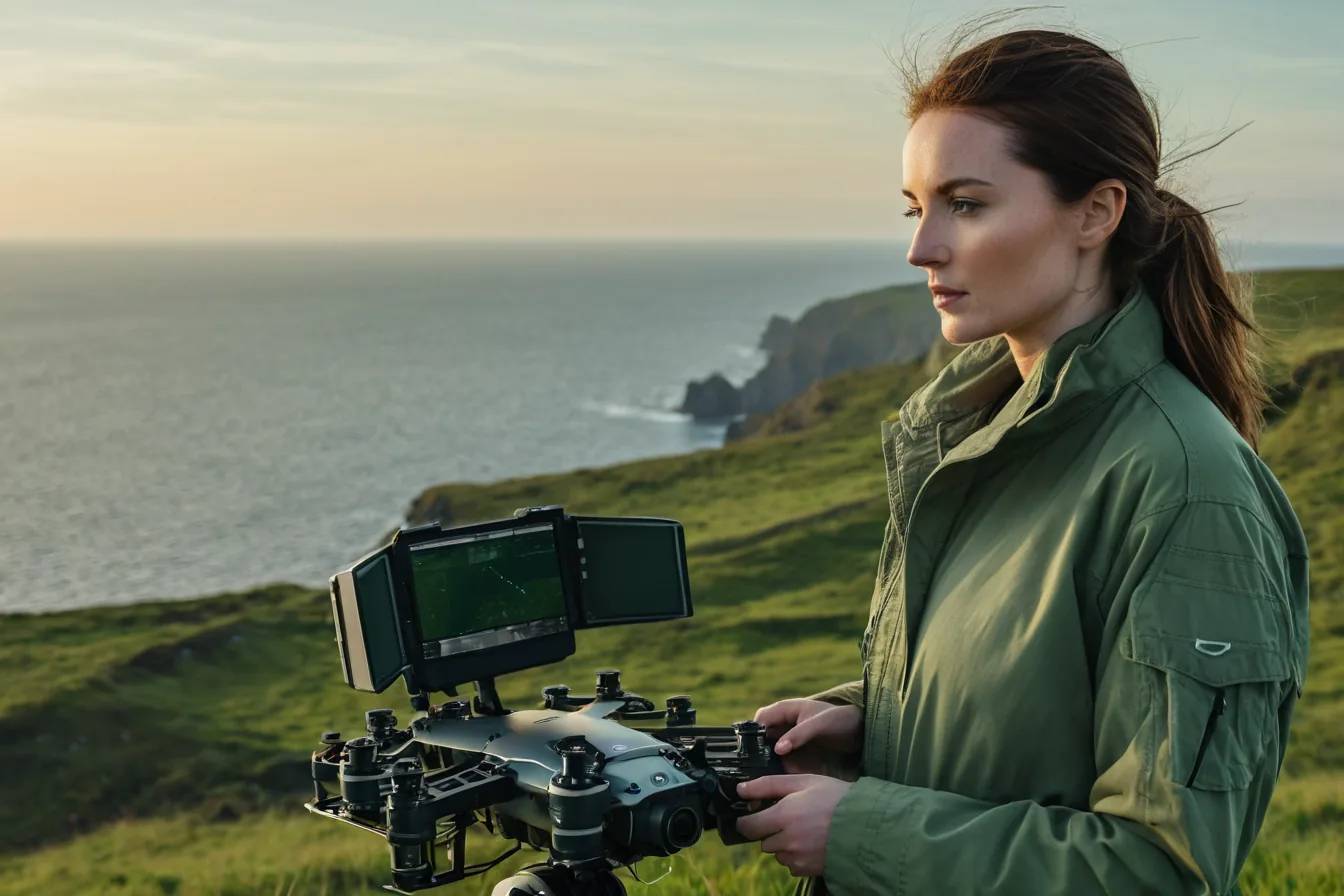
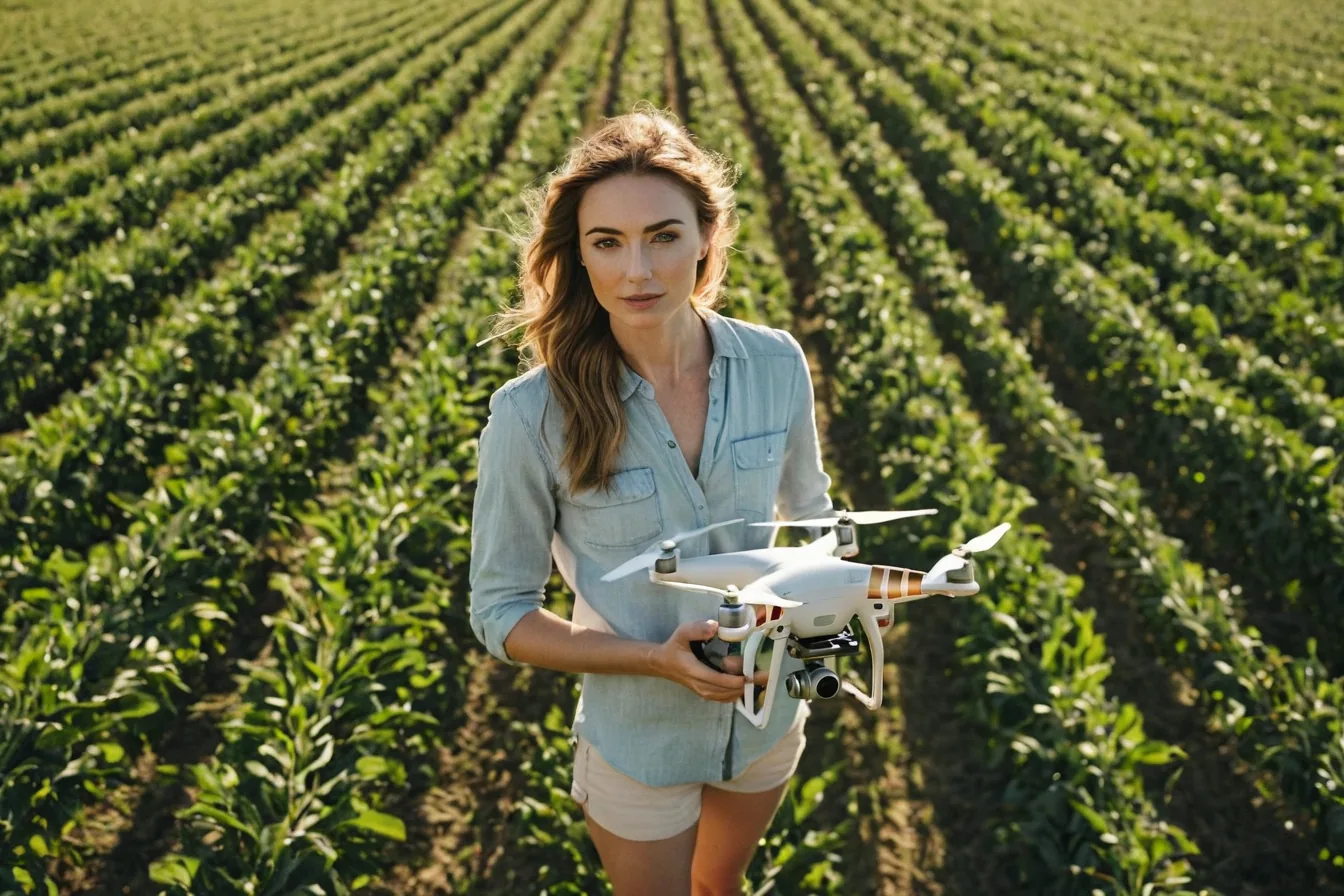
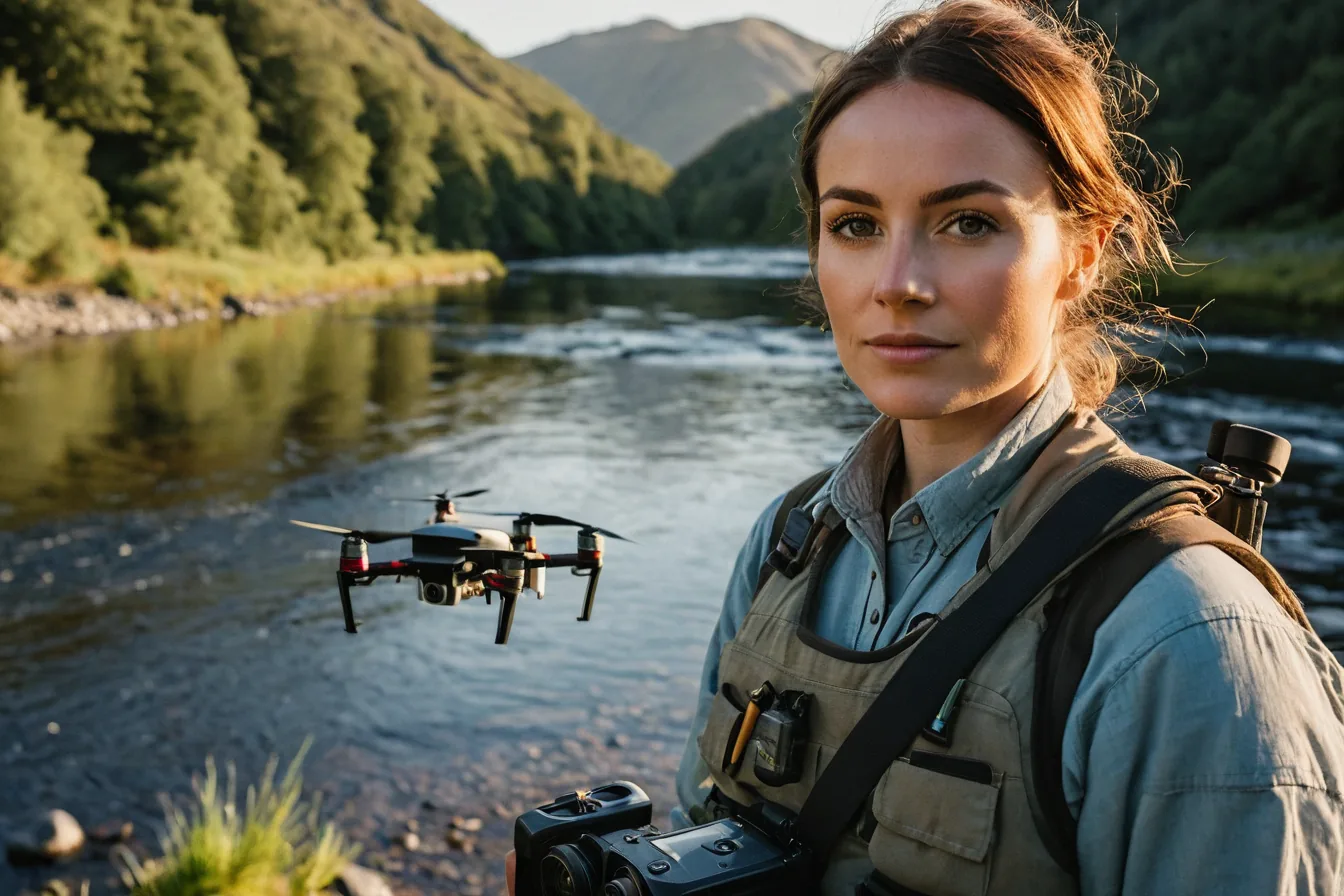
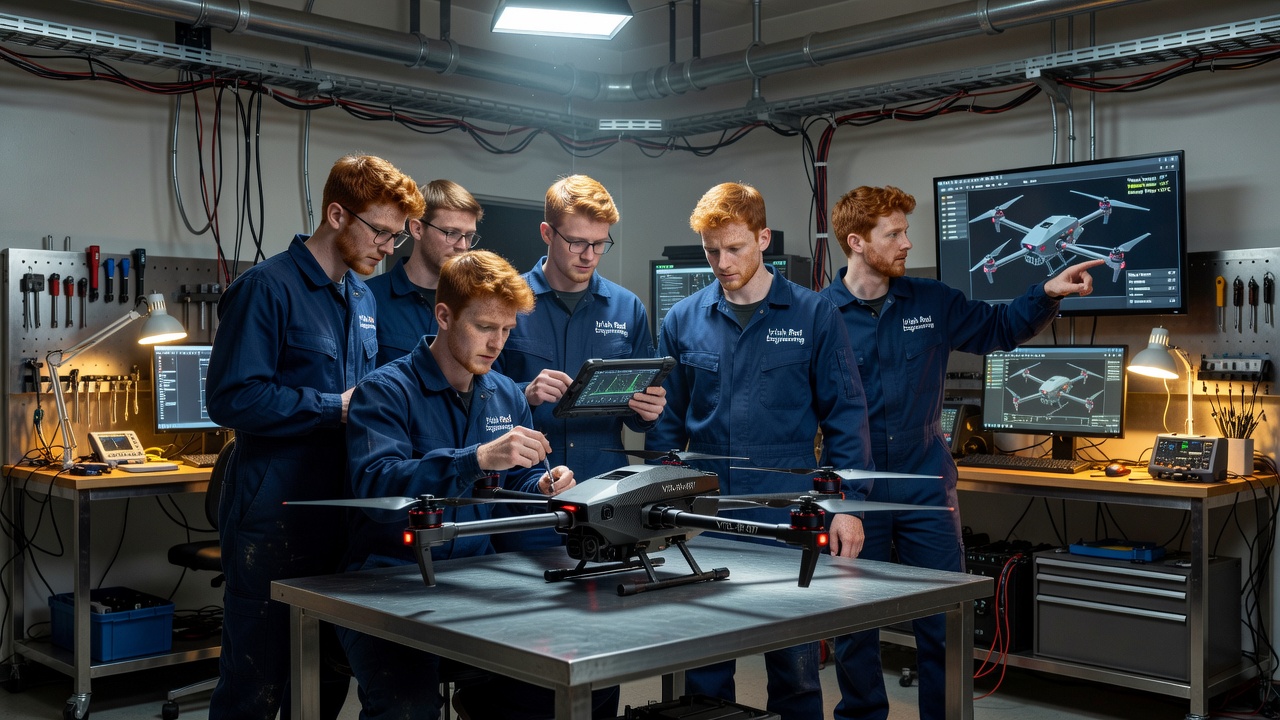
Illustrative imagery. A skilled, renewable workforce — building, flying and repairing Irish drones in every community.
For the country — a job, a skill and a drone in every parish — made in Ireland.

Let's build it. Now.
Engineering-first, Ireland-resident operations. The threat is named, the demand is funded, the line is costed. We are ready to deliver the sovereign capability the State has called for.
hello@drones.irish · drones.irish